
Event Fencing Considerations and Compliance for Major Events
Event fencing is not simply a matter of placing barriers around a venue.The fence layout affects access control, crowd movement, emergency evacuation, vehicle and pedestrian separation, privacy, sightlines, wind loading, security, and the way an event operates during both public hours and pack-in or pack-out.
In New Zealand, there is no single stand-alone “event fencing standard” that determines the correct system for every event. The appropriate controls come from the event-specific risk assessment, the Health and Safety at Work Act 2015, WorkSafe guidance, council and venue requirements, approved event plans, temporary-structure rules, traffic-management requirements, manufacturer instructions, and the conditions on the day. A safe event often uses more than one type of barrier. Crowd-control barriers, anti-climb temporary fencing, front-of-stage barriers, traffic barriers, and scrim all perform different functions and should not be treated as interchangeable.
Summary
For most New Zealand events, fencing should be selected through a documented, site-specific risk assessment and shown on the event site plan.
As a practical starting point:
Crowd-control barriers (CCBs) should be used to guide pedestrian movement, form queues and mark low-risk boundaries.
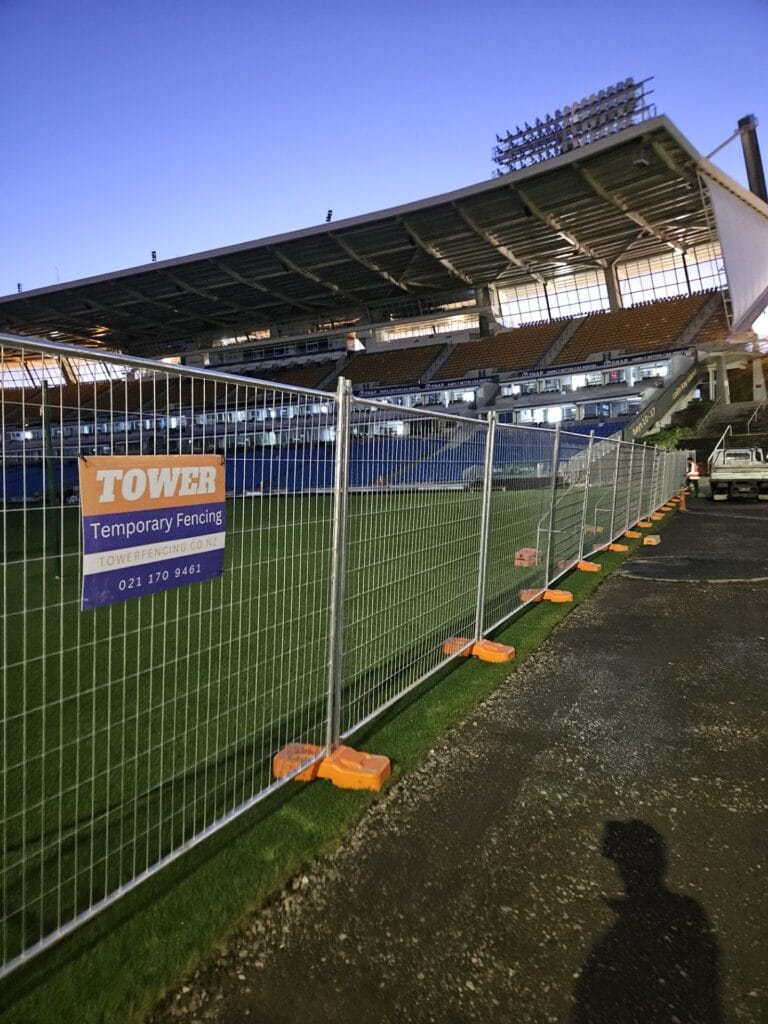
Full-height anti-climb mesh fencing, often called Heras-style fencing, should be used where access control, site security or separation from a restricted area is required.
Specialist front-of-stage barriers should be used where a standing audience may generate crowd pressure toward a stage. Standard CCBs and ordinary temporary fence panels are not substitutes.
Traffic-rated or purpose-designed vehicle barriers should be considered where the risk is vehicle entry or impact. Pedestrian barriers and ordinary temporary fencing are not crash barriers.
Scrim should be treated as a change to the fence system, because it increases the wind face and may also reduce surveillance and sightlines.
Emergency routes and exits must remain obvious and usable. Fencing that prevents unauthorised access can also create congestion or a dangerous bottleneck if it is poorly planned.
WorkSafe specifically warns that fencing may prevent unauthorised access while creating crowd congestion at entry and exit points. The correct layout is therefore the one that produces the lowest overall risk, not necessarily the layout with the greatest quantity of fence.
The legal and approval framework
1. Health and Safety at Work Act 2015
An event organiser operating as a person conducting a business or undertaking (PCBU) has duties under the Health and Safety at Work Act 2015 (HSWA). The organiser must ensure, so far as is reasonably practicable, the health and safety of its workers and must also ensure that other people are not put at risk by the event. Depending on the event, “other people” may include attendees, performers, volunteers, stallholders, contractors, neighbours, pedestrians, road users and members of the public.
The event organiser may not be the only duty holder. The venue operator, council, security provider, fencing contractor, production company, traffic-management contractor, stallholders and medical provider may have overlapping duties. Those PCBUs must consult, co-operate and co-ordinate their activities so far as is reasonably practicable. HSWA duties cannot be transferred simply by engaging a fencing supplier. Each party remains responsible to the extent that it can influence or control the matter.
As at September 2026, the Health and Safety at Work Amendment Act 2026 has received Royal assent, with its main changes coming into effect on 1 April 2027. The reforms place greater emphasis on critical risks. For event fencing, risks such as crowd crush, blocked evacuation, vehicle interaction, unstable screened fencing and public access to high-hazard areas should remain central to planning.
2. Event safety and risk-management plan
The fencing plan should sit within the wider event safety or risk-management plan rather than being treated as an isolated supplier drawing.
WorkSafe’s event-risk guidance applies to event-organiser PCBUs regardless of whether the event is held on public or private land. Events on council-owned or operated facilities may also need to follow the council’s event-permit and safety-plan requirements.
For events on private land, the district or unitary plan determines whether the activity is permitted or requires resource consent. Where consent is required, the council may require event, crowd, traffic, noise, emergency and site-management information as part of the application or consent conditions. The required detail will depend on the event’s attendance, location, duration, activities, operating hours and effects on the surrounding area.
The plan should identify the purpose and type of each barrier line; expected attendance and crowd-density controls; entrances, queues and exits; emergency and accessible routes; pedestrian and vehicle separation; licensed, restricted and hazardous areas; gates, feet, braces and ballast; scrim and wind controls; inspection responsibilities; and contingency actions.
3. Road corridors and traffic management
If an event changes the normal use of a road, parking lane, footpath or berm, a traffic management plan may be required. In Auckland, the plan must be approved before the activity starts. The event fencing layout must not conflict with the approved traffic management plan. It should maintain safe routes for pedestrians and cyclists, access to homes and businesses, emergency-vehicle access, and the required separation from live traffic. Crowd Control Barriers are pedestrian-management equipment. They should not be relied on to stop a moving vehicle. Where hostile-vehicle mitigation or traffic-impact protection is required, the system should be selected and designed for that purpose.
Match the barrier to the function
| System | Appropriate event uses | Important limitations |
|---|---|---|
| Crowd-control barrier (CCB) | Queues, pedestrian lanes, fun runs, low-risk viewing boundaries, temporary wayfinding | Easy to relocate; not a secure perimeter, anti-climb fence, crash barrier or high-pressure front-of-stage system |
| Anti-climb temporary mesh fencing – Open mesh | Event perimeter, backstage, plant and generator compounds, alcohol boundaries where accepted, ticketed zones, site security and restricted access | Requires feet, clamps, suitable gates and bracing; feet and braces must not create unmanaged trip hazards |
| Decorative barriers | VIP areas, sponsor activiations, photo areas, food zones, displays. | Higher cost with higher aesthetic. Used to control crowds similar to CCBs where a design aesthic is wanted. Think PVC picket fencing, velvet rope barriers, retractable belts etc. Unsuitable for crowd pressure or loading. |
| Specialist front-of-stage barrier | Concert stage fronts, crowd-pressure zones, pit lanes and selected internal breakwaters designed by competent people | Specialist engineered system; requires correct configuration, trained installation, security/medical access and active crowd monitoring. Consider cabling requirements as part of the integrated system and corners needed for the stage alignment. |
| Water-filled or traffic-rated barrier | Vehicle and pedestrian separation, road interfaces and selected vehicle-control applications | Performance depends on the exact product, interconnection, filling, end treatment and approved layout; not every plastic barrier is impact-rated |
| Independently supported screening, scrim, hoardings etc. | High-security, visual separation or locations where fence-mounted scrim is unsuitable | Higher cost and structural demand; wind, foundation, consent and egress implications require assessment |
Anti-climb mesh panels vs Chainlink fencing
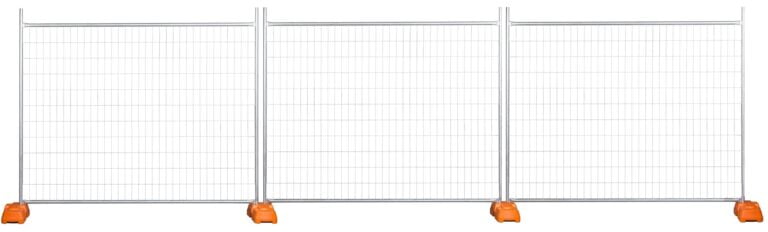
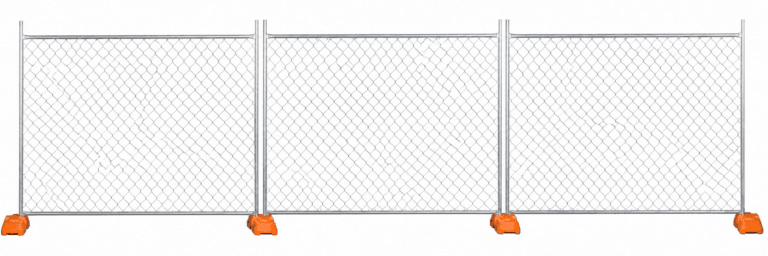
Heras-style (Anti Climb Mesh Fencing) welded-mesh fencing is more suitable for event perimeters and restricted areas than conventional chain-link fencing. Its close, stiff apertures make climbing more difficult, while rigid modular panels allow rapid installation, controlled gates and straightforward layout changes.
Typical uses include:
- Event perimeters
- Backstage and performer areas
- Production and equipment compounds
- Ticketed or restricted zones
- Licensed-area boundaries where accepted
- Generator, fuel and plant compounds
- Overnight event security
Panels must be installed as a complete system using appropriate feet, clamps, gates, braces and ballast. Openings, lifted panel ends, missing clamps and poorly controlled gates can compromise the perimeter.Chain-link and welded anti-climb fencing can both form an event boundary, but they do not provide the same level of access control. For events where children may be present, or where alcohol, ticket control, valuable equipment or backstage security increases the likelihood of attempted entry, close welded anti-climb mesh is usually the more defensible starting point.
Scrim, privacy and event presentation
Scrim can improve privacy and the appearance of an event site, but it is not merely decoration. Other grades of scrim exist with varying levels of visual blockout from 30% to 100%, but it’s recommended a full blockout materials is used where sight visibility needs to be removed from an area.
Scrim can:
block views into backstage, production, catering or storage areas
hide plant, bins, toilets and operational clutter
reduce distraction outside a ticketed area
provide sponsor, wayfinding or event branding
create a cleaner public-facing finish
limit casual observation of valuable equipment
However, visual screening can also remove useful surveillance. Security staff may no longer be able to see a queue building, a person in distress, an unauthorised entry attempt or activity on the other side of the fence. Screening should therefore be intentional and should not cover critical sightlines, exits, crossings, corners or locations requiring active supervision.
Comparing 90% blockout scrim, printed scrim and weedmat
| Scrim type | Relative cost | Visual obscurity | Presentation | Wind and operational considerations |
|---|---|---|---|---|
| 90% blockout privacy scrim | Medium | Very high; close to solid visual screening | Clean, uniform finish | Very high wind load. Treat as a near-solid screen and brace conservatively |
| Printed scrim or banner mesh | Highest | Medium to high, depending on weave, print coverage and viewing distance | Best for branding, sponsor value, wayfinding and event identity | Ink coverage, coating and continuous banners may reduce permeability. Do not assume “mesh” means low wind load |
| Weedmat used as budget scrim | Lowest | Moderate to high at close range, but product-dependent | Functional, dark and low-cost. less polished | Permeability, UV strength, tear resistance and fixing strength can vary. Treat conservatively unless reliable product data is available. |
90% blockout scrim is normally the best option where privacy is the main requirement. It is also the option most likely to make a temporary fence behave like a sail.
Printed scrim provides the strongest commercial and visual return. It can turn a perimeter into sponsor inventory, reinforce event wayfinding and improve public presentation. The printed area, coating and substrate affect airflow, so its wind performance should be confirmed rather than inferred from appearance.
Weedmat can be an effective low-cost visual screen for service compounds or less prominent boundaries. It can provide full blockout at a fraction of the cost.
Scrim wind loading and bracing
Open mesh allows air to pass through. Scrim increases the projected wind area, and wind pressure increases rapidly as wind speed rises. A fence that feels stable in ordinary conditions may overturn in a gust, particularly at exposed parks, waterfronts, road corridors, hilltops and open sports fields. The following is a practical Tower Temporary Fencing guide only. It is not site-specific engineering design, temporary-works design, certification or a substitute for manufacturer requirements.
| Fence-mounted material | Practical risk position | Indicative bracing approach | High-wind action |
|---|---|---|---|
| Open anti-climb mesh | Baseline | At least one brace every fourth panel as a minimum serviceability rule; increase at ends, corners, gates, returns, exposed areas and public interfaces. | Inspect after strong wind, impact or movement |
| 90% blockout scrim | Very high | Brace every second panel with increased ballast or three feet per braced bay where practicable; seek manufacturer or engineering advice on exposed sites | Roll up, remove or reduce the wind face before severe weather unless the system is specifically designed for it |
| Printed scrim or continuous banner mesh (50% or 30% blockout) | Medium to very high | Brace every second panel, with at least 2 feet. | Reduce or remove banners if movement, flapping or instability occurs |
| Weedmat or material without reliable permeability data | Treat as medium to high | Use a conservative layout. Normally every second panel until product and site performance justify otherwise | Roll up or remove before strong winds |
Brace the fence before fitting scrim. Position braces, feet and ballast on the controlled side where practicable and keep them out of public routes. Where that is not possible, revise the layout or provide an appropriate protected and visible solution rather than introducing a new trip hazard. On highly exposed, heavily screened or densely occupied sites, independently supported screening or solid hoarding may be more appropriate than attaching material to standard temporary panels.
Cable ties and the high-wind release method
Scrim is normally secured to the fence with cable ties through suitable reinforced eyelets or attachment points. Ties should be installed consistently and trimmed so sharp ends do not project into public areas.
Where inclement weather is forecast and the fence system has not been designed to carry the expected wind load:
Act before unsafe winds arrive.
Release or remove the bottom row of cable ties.
Roll or fold the scrim upward.
Secure the bundled scrim to the top rung or rail of the fence line.
Reinspect the exposed fence, clamps, feet and braces.
Once conditions have calmed and the forecast is acceptable, lower and refix the scrim after checking it for damage.
This method temporarily removes most of the wind face without requiring the entire scrim run to be taken away. It should be included in the event weather plan, with a named person authorised to make the decision and enough trained crew, spare ties and safe access to complete the work. Do not send workers into an exposed fence line to release or refit scrim once conditions are already unsafe. If the forecast exceeds the design or supplier limits, lowering the scrim may not be enough; the fence or screened area may need to be isolated, dismantled or independently stabilised.
Layout, gates and emergency egress
Fencing must support the event’s movement strategy in normal operation and during an emergency.
Check that:
public entrances have enough approach and queue space
search, scanning or ticket checks do not create unmanaged compression
exits discharge to a safe area rather than another fence line, road or queue
emergency gates are immediately openable by authorised staff while the event is occupied
emergency services can reach the agreed access points
security staff can observe blind spots created by corners or scrim
barriers do not conceal hydrants, emergency equipment, signs or hazards
attendees cannot push into unprotected feet, braces, sharp projections or dead ends
Avoid creating long funnels without escape options. Queue lanes should be reviewed for both everyday flow and foreseeable surges at opening, headline acts, alcohol cut-off, transport departures and event close.
Installation, inspection and weather management
Event fencing should be inspected after installation and then monitored throughout the period it remains onsite; including pack-in, closed hours and pack-out.
A practical inspection should confirm:
panels and barriers match the approved layout
all required feet, clamps, connectors, braces, returns and ballast are present
gates operate correctly and do not project into public routes
emergency access and egress remain clear
there are no excessive bottom gaps or unprotected openings
feet, braces and ballast do not create unmanaged trip hazards
scrim and signage are secure and have no loose or sharp fixings
no panel is bent, leaning, lifted or moving abnormally
ground conditions have not softened, settled or been undermined
barriers have not been moved by the public, contractors or vehicles
lighting and reflective marking remain adequate after dark
Reinspect after strong winds, heavy rain, impact, crowd pressure, vandalism, contractor activity or any layout change.
Weather triggers should be agreed before the event. These may include thresholds for lowering scrim, closing exposed areas, adding ballast, stopping public entry or postponing activity. Use the manufacturer’s limits, competent advice and the event risk assessment; do not rely on a generic wind number that ignores the actual site and system.
Written by Joseph Knights, BE(Hons) Civil, drawing on civil construction, site-delivery, temporary fencing, site-security and health and safety risk-management experience in New Zealand.
This guide provides general technical information only. It is not legal advice, a crowd-management plan, site-specific engineering or temporary-works design, certification, or a substitute for manufacturer instructions, event-specific risk assessment, venue requirements, council approval conditions, emergency-service advice or PCBU duties under New Zealand health and safety legislation.
Sources and further reading
WorkSafe New Zealand — Planning for first aid and medical services at events
WorkSafe New Zealand — Understanding the changes to health and safety law
Auckland Council — Guidelines: Event Safety Risk Assessment and Management Plan
Auckland Council — Standard conditions for an event permit application
Building Performance — Tents, marquees and similar lightweight structures
Tower Temporary Fencing — Temporary fence scrim, signage and wind loading in New Zealand