
Sound Mats for Construction Noise Control in Auckland – $2.50/mat/day
Construction projects in busy urban areas often generate noise that can affect nearby residents, businesses, and public spaces. Sound mats provide an effective way to reduce noise levels by creating temporary acoustic barriers around construction sites.
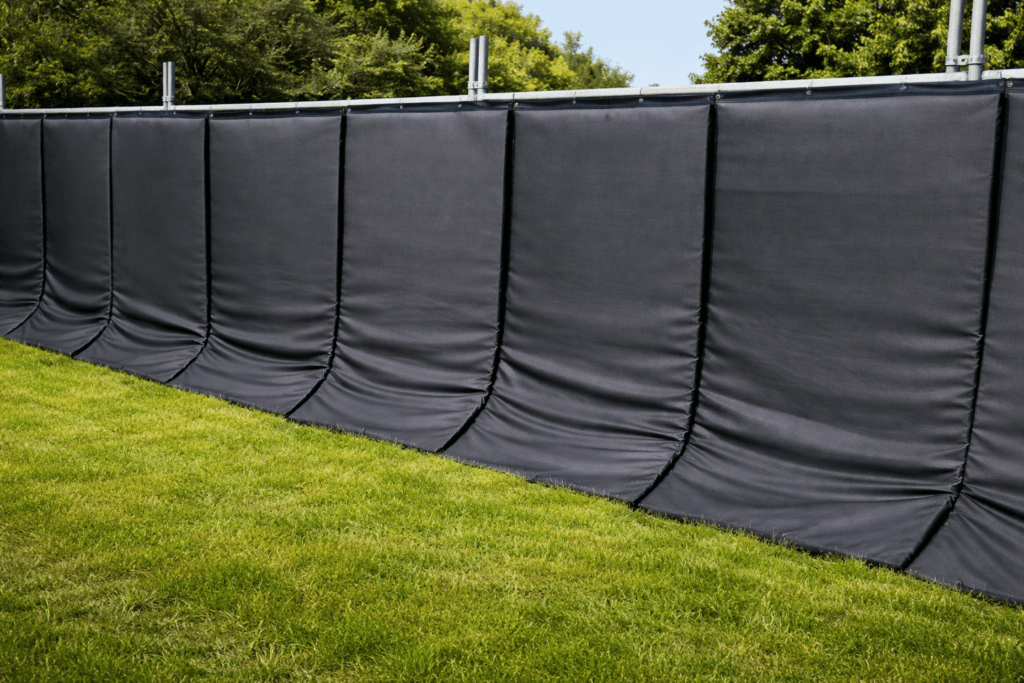
Tower Temporary Fencing supplies high-performance sound mats in Auckland designed to attach directly to temporary fencing panels. These acoustic systems help limit noise escaping from worksites while supporting compliance with council regulations and workplace safety requirements. We also provide construction barriers, portaloos, ground protection, and water barriers to create a full suite of products for your construction sites.
Often referred to as acoustic barriers, sound barriers, acoustic mats, portable sound barriers, or noise reduction barriers. These temporary noise control systems are widely used across construction, demolition, and infrastructure projects where noise management is required.
Auckland Council Guidelines for Construction Noise
Construction sites in Auckland must comply with noise limits set under the Resource Management Act and monitored by Auckland Council.
Typical guideline limits for construction noise are:
| Time Period | Typical Maximum Noise Level |
|---|---|
| Daytime (7am – 6pm) | ~70–75 dB |
| Evening (6pm – 10pm) | ~65 dB |
| Night (10pm – 7am) | ~40–45 dB |
If noise levels exceed these thresholds, contractors may receive complaints or enforcement notices requiring mitigation measures such as sound barriers or acoustic mats. Using sound mats around high-noise equipment can help reduce noise reaching nearby properties and assist with compliance.
When Should Contractors Consider Using Sound Mats?
To meet these obligations under the Resource Management Act, contractors should consider installing sound mats when construction activities produce noise that may affect nearby properties or exceed recommended limits. A Sound Level Meter / Sound Pressure Level (SPL) meter can be used to measure decibels at a measured distance to confirm compliance with the above legislation. For a cheaper alternative there are many apps on the Google Play / Apple app store that can be downloaded on your mobile phone to give rough indications on noise measurement e.g. Decibel X.
If the measured noise exceeds these limits, or you can confidently confirm before establishment that noise limits will exceed these thresholds, acoustic barriers can be an effective means of mitigation before commencing noisy works to prevent noise complaints and ensure work continues without disruption.
Basic monitoring steps include:
Measure noise levels at the site boundary.
Check readings during the loudest construction activities.
Compare results against council or project noise limits.
Install acoustic barriers or reposition noisy equipment if readings are high.
While smartphone apps provide a general indication, professional sound level meters provide more accurate readings for compliance purposes.
Using these tools can help determine whether sound mats are required to reduce noise impact.The below table provdes a guide for noise generated for various different machines. Please keep in mind though these will vary by make, model, and types of attachments on the machines so measurement is always recommended:
| Construction Equipment | Typical Noise at Source (dB) | Approx Distance to Reduce to ~75 dB | When Sound Mats May Be Needed |
|---|---|---|---|
| Excavator | 85–90 dB | ~15–25 m | When operating near residential boundaries |
| Skid Steer Loader | 88–92 dB | ~20–30 m | Urban construction sites |
| Air Compressor | 85–90 dB | ~15–25 m | Sites close to neighbouring buildings |
| Concrete Mixer Truck | 85–90 dB | ~15–25 m | Small residential construction |
| Concrete Saw | 100–105 dB | ~80–120 m | Cutting near houses, offices or footpaths |
| Grinder / Cut-Off Saw | 97–100 dB | ~60–100 m | Demolition or steel cutting |
| Bulldozer | 100–107 dB | ~100–150 m | Earthworks near residential areas |
| Vibratory Roller | 100–105 dB | ~80–120 m | Roadworks in urban areas |
| Jackhammer | 105–110 dB | ~120–200 m | Demolition or pavement breaking |
| Pile Driver | 105–115 dB | ~150–300 m | Large infrastructure projects |
Sound Mats Installed on Temporary Fencing
Tower Temporary Fencing installs noise curtains directly onto 1.8 m temporary fencing panels to create a continuous noise barrier around a site. These reduce noise by approximately 30 dB to help meet compliance requirements. Additional bracing will be required on the temporary fence systems to accomdate increase wind area loading.
This system allows contractors to:
Quickly establish acoustic protection around a project
Expand or relocate barriers as work areas change
Reduce noise leaving the construction site
Improve compliance with council requirements
Key product features:
Product dimensions: 2m x 1.2m – 50mm thick.
Up to 30dB noise reduction
Product weight: 6kg
Quick and easy to install
Waterproof & fire resistant
By combining temporary fencing with acoustic mats, contractors can create an effective perimeter noise control system.
Frequently Asked Questions
Sound mats are temporary noise-reduction panels used on construction sites to help reduce noise leaving a work area. They are commonly attached to temporary fencing to create acoustic barriers around noisy equipment such as generators, concrete saws, jackhammers, and demolition tools.
High-quality sound mats can typically reduce noise levels by 20–30 decibels depending on installation and site conditions. When installed along a site perimeter, these sound barriers help absorb and deflect sound waves before they reach neighbouring properties.
Contractors should consider installing sound mats when construction activities may generate noise levels that could affect nearby homes, businesses, schools, or hospitals. They are particularly useful during demolition, concrete cutting, drilling, or piling work, where machinery can produce high noise levels.
They are not always mandatory, but Auckland Council requires construction noise to comply with NZS 6803: Construction Noise guidelines. If noise levels at neighbouring properties exceed recommended limits, contractors may need to install acoustic barriers or other noise mitigation measures such as sound mats.
Yes. Most sound mats are specifically designed to attach to 1.8-metre temporary fencing panels. When installed together, the fencing and acoustic mats create a continuous noise barrier around the perimeter of a construction site.
Yes. Installing sound mats can significantly reduce the amount of noise leaving a site. This can help prevent complaints from neighbouring properties and demonstrate that contractors are taking reasonable steps to manage construction noise.
Sound mats are usually fixed to temporary fencing using hooks, cable ties, tie wire, straps or mounting systems. The mats overlap slightly between panels to create a continuous acoustic barrier that blocks and absorbs noise.
Yes. Sound mats are commonly used to reduce noise generated by equipment such as excavators, generators, concrete saws, jackhammers, and demolition machinery. While they will not eliminate noise completely, acoustic barriers can significantly reduce the noise reaching surrounding areas.
Get a Quote for Crowd Control Barriers Auckland
If you need dependable acoustic barrier hire in Auckland, Tower Temporary Fencing can provide the right solution. Our team supplies high-quality barriers for events, construction sites, and public safety applications across the region.
Contact us today and ensure your site or event is safe, organised, and professionally managed.